Be yourself; Everyone else is already taken.
— Oscar Wilde.
This is the first post on my new blog. I’m just getting this new blog going, so stay tuned for more. Subscribe below to get notified when I post new updates.
Be yourself; Everyone else is already taken.
— Oscar Wilde.
This is the first post on my new blog. I’m just getting this new blog going, so stay tuned for more. Subscribe below to get notified when I post new updates.
“A Boss has the title; a Leader has the people” – Simon Sinek

This has been one of my favorite quotes when it comes to leadership which indicates that a leader is an influencer whereas a boss is a commander. The major difference between both the roles is that a leader influences other by giving an example of what he is doing whereas a boss dictates on what needs to be done. As Leadership is “the ability of an individual to influence, motivate, and enable others to contribute toward the effectiveness and success of the organization (Yukl,2013).
I did my bachelor’s in management studies where I was good in managing various events and tasks held in my college, but I came to know the meaning of Leadership when I enrolled in Coventry University, London for doing my MBA course in September 2019. Within the past three months I studied the subject called ‘leading in changing world’ attending and participating in the lectures and seminars I started developing myself as a leader. We were given certain activities to do, games, presentations and debates which boosted my confidence, communication skills and made me realize my strength and weaknesses as a leader.
There are many leaders but very few are ethical. So, for me being ethical in leadership is an important criterion. For building of my leadership brand, I have applied the 4V model of ethical leadership which consists of Vision, Values, Voice & Virtue. According to Dr. Bill Grace the 4V model of ethical leadership is a framework which aligns the beliefs and values along with behaviors and actions (Yukl,2013).
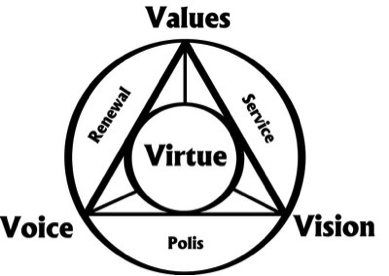
Vision – I have a vision for influencing people in the world, without any vision I won’t be able to lead anywhere. It’s vision that pulls me to work hard for my future.
Values – My inbuilt values will have a reflection in my leadership style, as my soft-spoken nature enables me to treat my team members humbly.
Voice – My voices needs to be heard by many but before that I need to speak first. I need to convey my ideas and belief’s to people working in my team through effective communication.
Virtues – I need to implement all above 3V’s in order to be a Virtuous leader.
The Hofstede’s Cultural Dimensions Theory, developed by Geert Hofstede, is a framework used to understand the differences in culture across countries and to discern the ways that business is done across different cultures (Corporate Finance,2015).
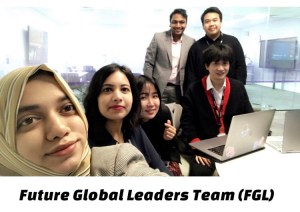
I never had a global learning experience before, So I was very excited to work with team members from different parts of world during the first week of our seminar. We introduced ourselves and each other’s country background and got the opportunity to learn about their differences. We also used the Hofstede cultural dimensions for the comparison.
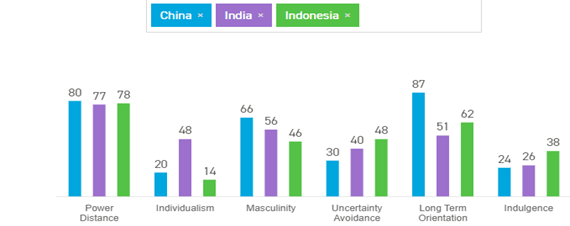
In terms of masculinity China is on the lead. Masculinity comes with the following characteristics: distinct gender roles, assertive, and concentrated on material achievements and wealth-building. There was no major difference found within China, India and Indonesia for power distance. The power distance index considers the extent to which inequality and power are tolerated. This shows that all three countries embrace hierarchy and considers power important.

There are mainly three contemporary styles of leadership consisting of Autocratic, Laissez-faire, Democratic. I will further explain how all these styles of leadership were reflected in me and how I developed the most suitable leadership style for me.
Autocratic Leadership – The autocratic leadership process generally entails one person making all strategic decisions for subordinates (Shaeffor,2014). I wasn’t a dominant leader, but I used to assign tasks for my team members without realizing that their choices matter too. I realize that this kind of leadership style is not effective when it comes to freedom of subordinates. So, I moved to another style of leadership.
Laissez-faire leadership – Laissez-faire leadership, also known as delegative leadership, is a type of leadership style in which leaders are hands-off and allow group members to make the decisions (Cherry,2019). By following this leadership style, I did a mistake for letting my teammates go astray as I wasn’t aware that they can’t work on their own. As they were not directed in the right way by me later, I realize that it was my responsibility to make right decisions for them with their agreement as well.
Democratic Leadership –
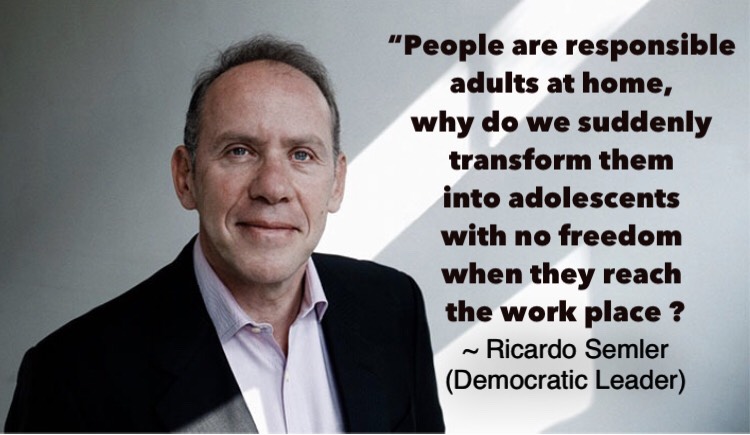
Democratic leadership, also known as participative leadership or shared leadership, is a type of leadership style in which members of the group take a more participative role in the decision making process (Morin,2019). I came to know about this style of leadership through Ricardo’s Semler case study & I was very much influence by it. I started practicing this leadership style and realized that while group members are encouraged to share their thoughts, democratic leadership can lead to better ideas and more creative solutions to problems.
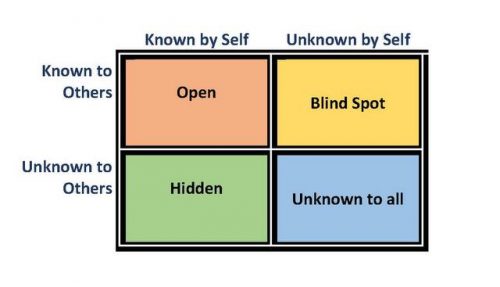
A simple framework for looking at self-insight is the Johari window. This classifies behavior in matrix form between what is known–unknown to self and what is known–unknown to others in order to encourage a reduction of the individual’s ‘hidden’ behavior through self-disclosure and of the ‘blind’ behavior through feedback from others (Mullins & Christy, 2016).
OPEN – Before participating in team works there were some qualities of mine like optimism, patience, effective listening which I was aware of it as they always reflected in my behavior also making it open to others & easy to observe.
HIDDEN – Hidden behavior is that which individual conceals it from other group members and don’t communicate it. There are some weaknesses of mine which I choose not to reveal.
BLIND SPOT – This a behavior which is known to others and unknown to self. I wasn’t aware of some of my strengths and weaknesses but feedback from my teammates helped me to recognize my blind spot. I was appreciated by my teammates for my positive energy and enthusiasm for the work I was doing. The only negative feedback I received was of lack of controlling, one of my team members said I was extra lenient which sets the team members loose to do anything. Such kind of behavior is not always good.
UNKNOWN TO ALL – I am still in quest of my unknown capabilities which will assist me in becoming a successful future leader and influence the people around me.
I have seen significant development in my leadership style throughout my MBA journey which enabled me to learn about many theories of leaderships as well as leadership styles and developed me to face the challenges in global exposure. I am looking forward to implementing them in my future endeavors. I aspire to be a leader who brings people up from their comfort zone in order to make them grow and transform.

Is Brexit a Destiny or Disaster? If you are living in UK, by the present time you must have heard this boiling term ‘BREXIT’. But what exactly Brexit is? What impact it will leave on the country & businesses running in UK? Well in this blog you will get to know the answers for above questions also we will learn how the retail industry company like Tesco should tackle this change & get ready for it. We will also see various models which can help in the change management process for the organization.
Change is defined as, “an inevitable and constant factor, an inescapable part of both the social & the organizational life & everyone is subjected to continual change of one form or the other” (Mullins 2010). In order to thrive in an increasingly competitive global environment, an organization must pay attention to its continual effectiveness and development. An underlying feature of the successful organization is the ability to adapt to change (Mullins 2016). Whereas Change management is the systematic manner to cope up with driving change occurring in the environment, implementing strategies, controlling change & helping people to adapt change (Rouse 2019).
Coming to the term Brexit which means Britain Exit, in 2016 UK decided to leave the EU (European Union) because of which there are lot of uncertainties going on as there are lot of knowns & unknowns. Leaving the EU is genuinely a major regime change, with massive political, legal, economic and social consequences (Rogers 2019). Many companies are struggling to understand what life would be like if UK decides to leave EU, they need to rethink on how they operate & organize themselves according to the present scenario. I decided to study the impacts of Brexit on retail industry company like Tesco and how they should come up with an action plan ready for the change.
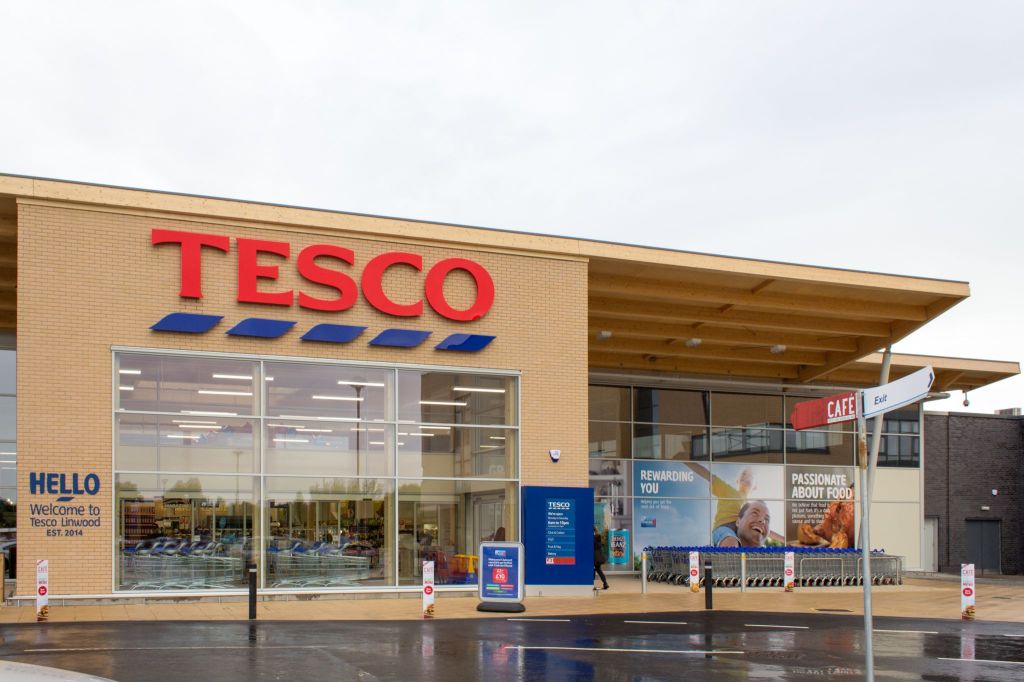
Tesco is a British global food supplier & general product retailer, they have their outlets & inlets across seven nations in Asia & Europe & it is the market leader of groceries in UK with market share of around 27 %. It is by far the largest supermarket in the UK. Well Brexit impact on a company like Tesco will result in an increase to cost of goods & overhead costs, higher import tariffs, higher sourcing costs from a weaker sterling, higher labor costs and the potential cost of customs friction from border controls (Tesco annual report, 2019). While a no-deal Brexit’s impact on the pound remains uncertain, the cost of imports and raw materials could become more expensive as retail prices would be increased if the pound value weakens further than it already has (Retail Gazette, 2019).
To prepare themselves for the upcoming change Tesco needs to implement some practices to evolve and survive. If we look on Lewin’s model which is most popular model for change management, we won’t be able to achieve satisfying results as Lewin’s (1947) three-stage model of planned change involves unfreezing the present situation, movement or changing to a new state and refreezing the new state to make it endure (McGuire, 2018).
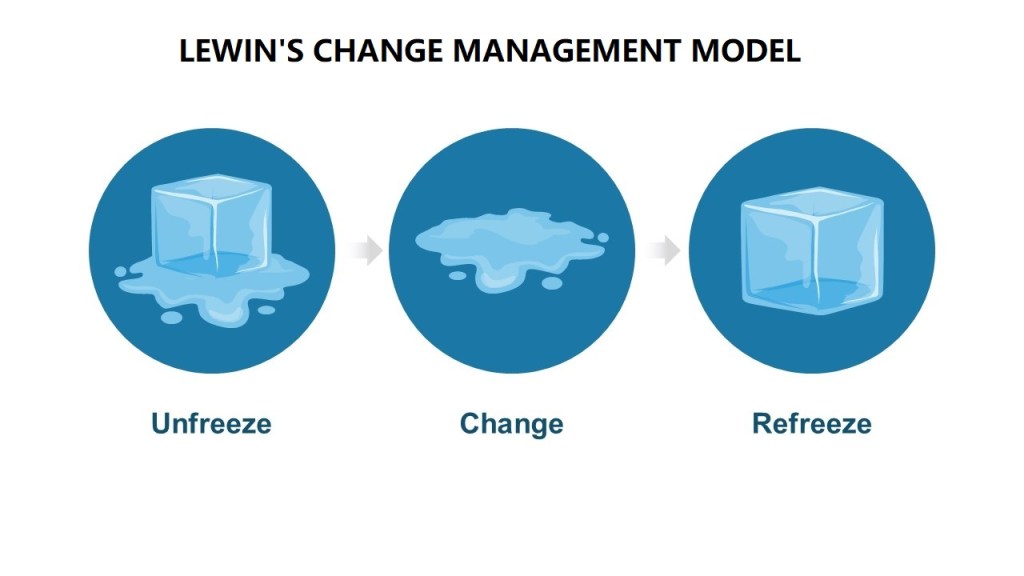
As Tesco don’t completely needs to unfreeze its current business situation, they only need to rethink strategies to maintain the cash flow and continuous supply of goods without any barrier in trade practices. So, for a company like Tesco, John Kotter’s (1996) award winning 8 steps for leading change model would be more suitable. This model includes the following steps:
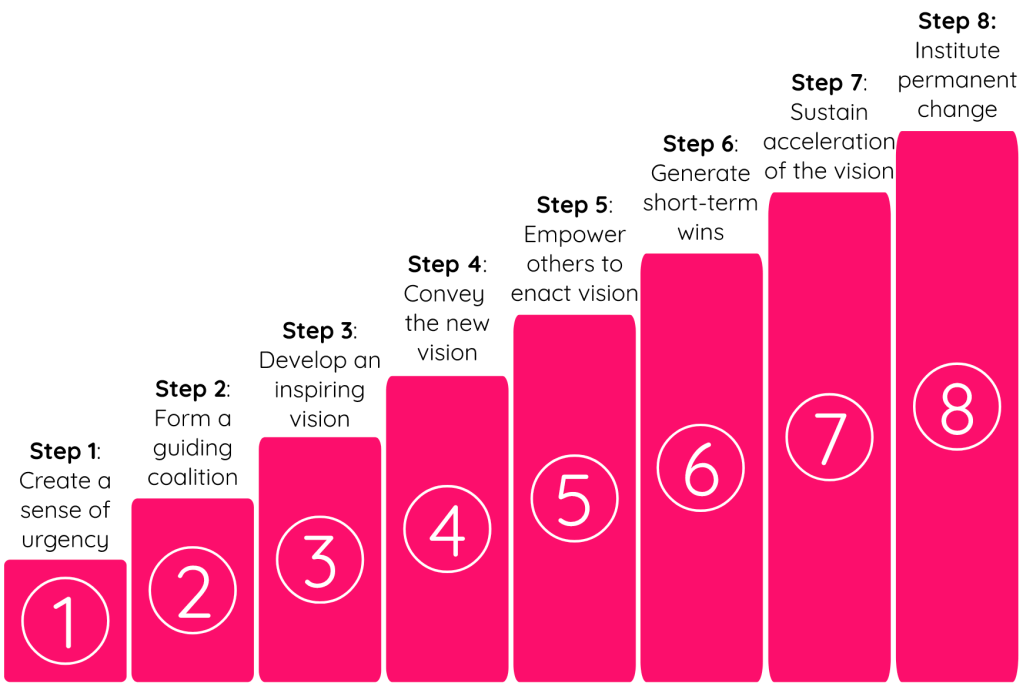
Step 1 Create Urgency:
Managers need to make employees understand why the change is necessary? Tesco should identify and highlight the potential threats regarding Brexit impact on the company. As a no deal Brexit could mean tariffs and delays at the border that interrupts supply of some foods (Finance Express, 2019). Failure to prepare for this will cause disruptions and create uncertainty around business, ability to recruit, supply of goods to customers, disrupted financial results and operations.
Step 2 Forming a powerful coalition:
By Identifying the effective change leaders in Tesco and the key stakeholders, requesting them their involvement and commitment towards the entire process can Form a powerful change coalition who would be working as a team. In such way Tesco can form a Committee for ongoing concern, longer-term prospects with consideration of forecast cash flows, including sensitivity to trading and expenditure plans and potential mitigating actions considering any impacts of the uncertainties arising from Brexit.
Step 3 & 4 Creating a vision for company & Communicating the vision:
This can be achieved by Determining the core values, defining the ultimate vision and the strategies for realizing a change in a company & communicating the change in the vision very often powerfully and convincingly by Connecting the vision with all the crucial aspects like performance reviews, training (Juneja,2015).
Step 5 Removing Obstacles:
There is need for continuous checking of barriers or people who are resisting change (Juneja,2015). Tesco needs to implement proactive actions to remove the obstacles involved in the process of change.
Step 6 Create short term wins:
Tesco needs to create many short-term targets first instead of one long-term goal, which are achievable and less expensive and have lesser possibilities of failure.
Step 7 Build on the change:
Achieving continuous improvement, If Tesco can capitalize on these above steps also with promoting their local produce or adapting their range than they will be one step ahead.
Step 8 Anchor the change:
Tesco should ensure that the successful change becomes an integral part in their organizational culture.
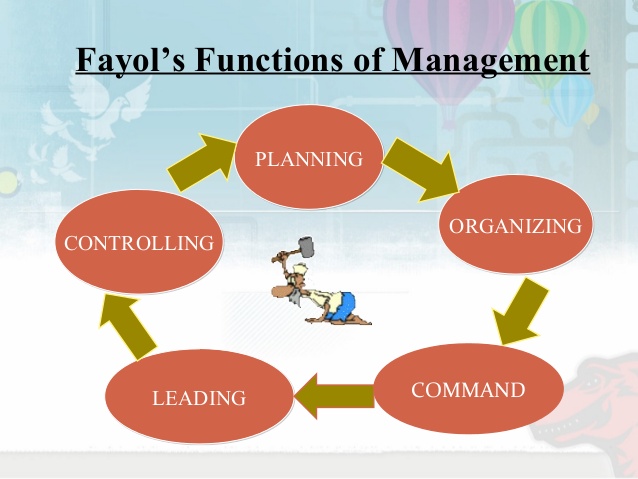
Fayol’s 5 functions of management – Management in everyday routine carries five major functions. They are Planning, Organizing, Commanding, Coordinating, and controlling (Fayol,1984). As management is necessary part of an organization, implementing these functions by Tesco can make them achieve their desire objectives in change management process.
If Brexit occurs then there will be increased tariffs and regulatory checks, which means the cost of making fresh food and drink available could increase while everyday food prices could increase. Tesco needs to take practical steps to mitigate this, by adopting a ‘peak mindset’ and collaborating with their supply base. Making more of its own products, sourcing more from the UK, improving its buying power and diversifying into wholesale will really help them to sustain for long run in the competitive environment after Brexit. If Tesco arises with the right strategy it would be a Destiny for them otherwise it will turn out into a Disaster after Brexit.

Hello Everyone, for me Zero to Infinity means to reach the pinnacle of success you need to begin from the bottom and yes this is how I started. Thank you for visiting my blog.
This is an example post, originally published as part of Blogging University. Enroll in one of our ten programs, and start your blog right.
You’re going to publish a post today. Don’t worry about how your blog looks. Don’t worry if you haven’t given it a name yet, or you’re feeling overwhelmed. Just click the “New Post” button, and tell us why you’re here.
Why do this?
The post can be short or long, a personal intro to your life or a bloggy mission statement, a manifesto for the future or a simple outline of your the types of things you hope to publish.
To help you get started, here are a few questions:
You’re not locked into any of this; one of the wonderful things about blogs is how they constantly evolve as we learn, grow, and interact with one another — but it’s good to know where and why you started, and articulating your goals may just give you a few other post ideas.
Can’t think how to get started? Just write the first thing that pops into your head. Anne Lamott, author of a book on writing we love, says that you need to give yourself permission to write a “crappy first draft”. Anne makes a great point — just start writing, and worry about editing it later.
When you’re ready to publish, give your post three to five tags that describe your blog’s focus — writing, photography, fiction, parenting, food, cars, movies, sports, whatever. These tags will help others who care about your topics find you in the Reader. Make sure one of the tags is “zerotohero,” so other new bloggers can find you, too.

 GLOBAL BUSINESS